
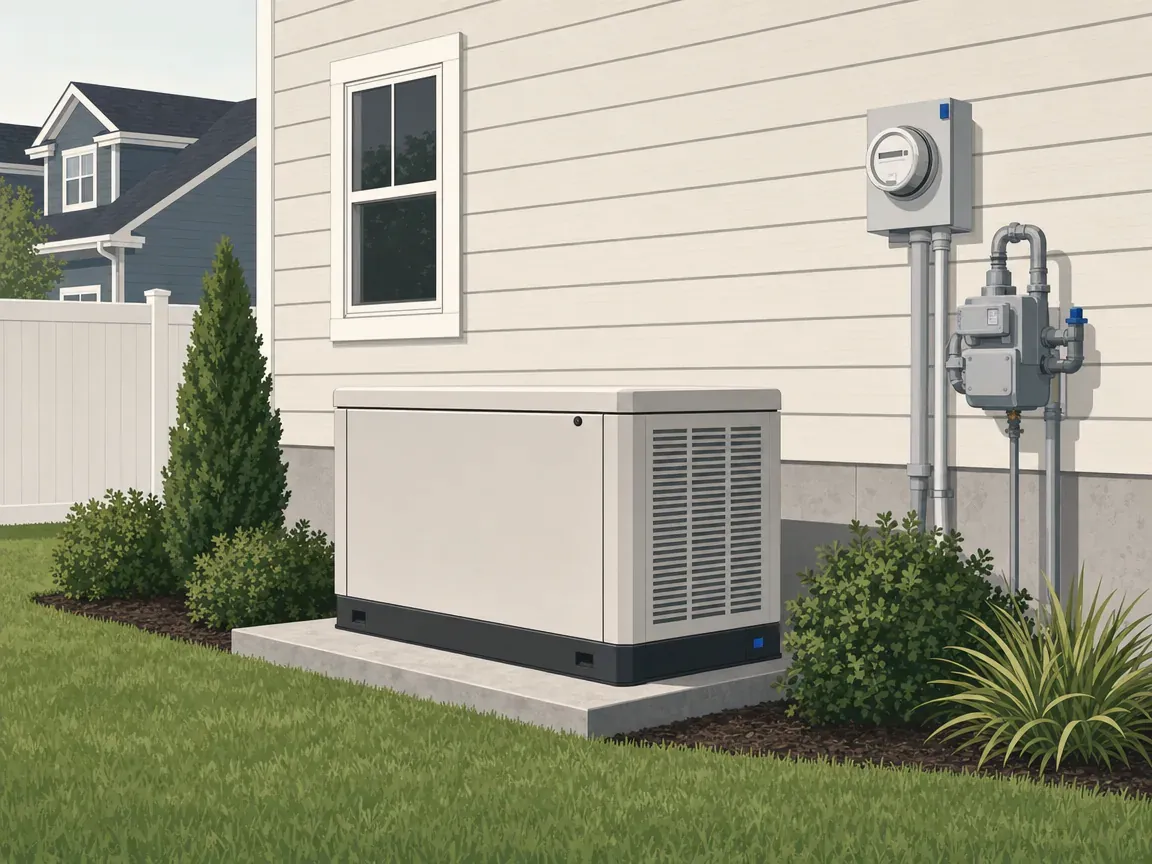
Frequently chosen sizes
14 kW size
Guardian 14 kW, transfer switch included
- Listed price
- $5,949
- Average installed cost, US
- $9,749 to $14,649
- Half load, natural gas
- Per hour, $4.27
18 kW size
Guardian 18 kW with a transfer switch
- Listed price
- $6,769
- Average installed cost, US
- $10,569 to $15,469
- Half load, natural gas
- Per hour, $3.70
22 kW size
Guardian 22 kW with a transfer switch
- Listed price
- $7,369
- Average installed cost, US
- $11,169 to $16,069
- Half load, natural gas
- Per hour, $4.47
26 kW size
Guardian 26 kW with a transfer switch
- Listed price
- $8,219
- Average installed cost, US
- $12,019 to $16,919
- Half load, natural gas
- Per hour, $4.12
Generator size for each house size
| House | No AC, gas | Central AC, gas | Central AC, propane | Installed, AC on gas, US average | Gas an hour, half load |
|---|---|---|---|---|---|
| 1,000 sq ft | 14 kW size | 18 kW size (3 ton) | 18 kW size | $10,569 to $15,469 | $3.70 |
| 1,500 sq ft | 14 kW size | 18 kW size (3 ton) | 18 kW size | $10,569 to $15,469 | $3.70 |
| 2,000 sq ft | 14 kW size | 22 kW size (3 ton) | 18 kW size | $11,169 to $16,069 | $4.47 |
| 2,500 sq ft | 18 kW size | 22 kW size (3 ton) | 18 kW size | $11,169 to $16,069 | $4.47 |
| 3,000 sq ft | 18 kW size | 24 kW (4 ton) | 22 kW size | $11,589 to $16,489 | $4.45 |
| 3,500 sq ft | 18 kW size | 24 kW (4 ton) | 22 kW size | $11,589 to $16,489 | $4.45 |
| 4,000 sq ft | 18 kW size | 26 kW size (4 ton) | 22 kW size | $12,019 to $16,919 | $4.12 |
| 5,000 sq ft | 22 kW size | 26 kW size (4 ton) | 24 kW | $12,019 to $16,919 | $4.12 |
These prices follow US average electrician pay plus EIA gas prices, and the tool with every state page works from that state's own numbers. See more sizes and how many watts a house uses: generator size for a house.
At US average prices, a house of 2,000 sq ft with central air needs 22 kW:
Generac gives the list price and fuel table, BLS gives electrician wages, and EIA gives gas and propane prices. How the price breaks down.
How the brands compare





Head to head: Generac vs Kohler, Cummins vs Generac, Champion vs Generac, Briggs & Stratton vs Generac.
The method behind generator size
The load sheet follows NEC 220.83, a method inspectors accept for an existing house. Lights and outlets add 3 VA for every square foot. Kitchen and laundry circuits add another 4,500 VA, and fixed appliances add their nameplate watts. The first 8,000 W get counted in full, and anything past that counts at 40%. A house never has everything running at once.
Add whichever of heating or cooling is larger, in full. Next, add the biggest motor startup. A 3-ton AC compressor jumps from a draw of 3,500 W to 6,000 W for one second. The running load limit for the generator is 80% of its rating; startup is allowed the full 100%. On natural gas, the rating drops by 11%.
Whole house generator or a portable
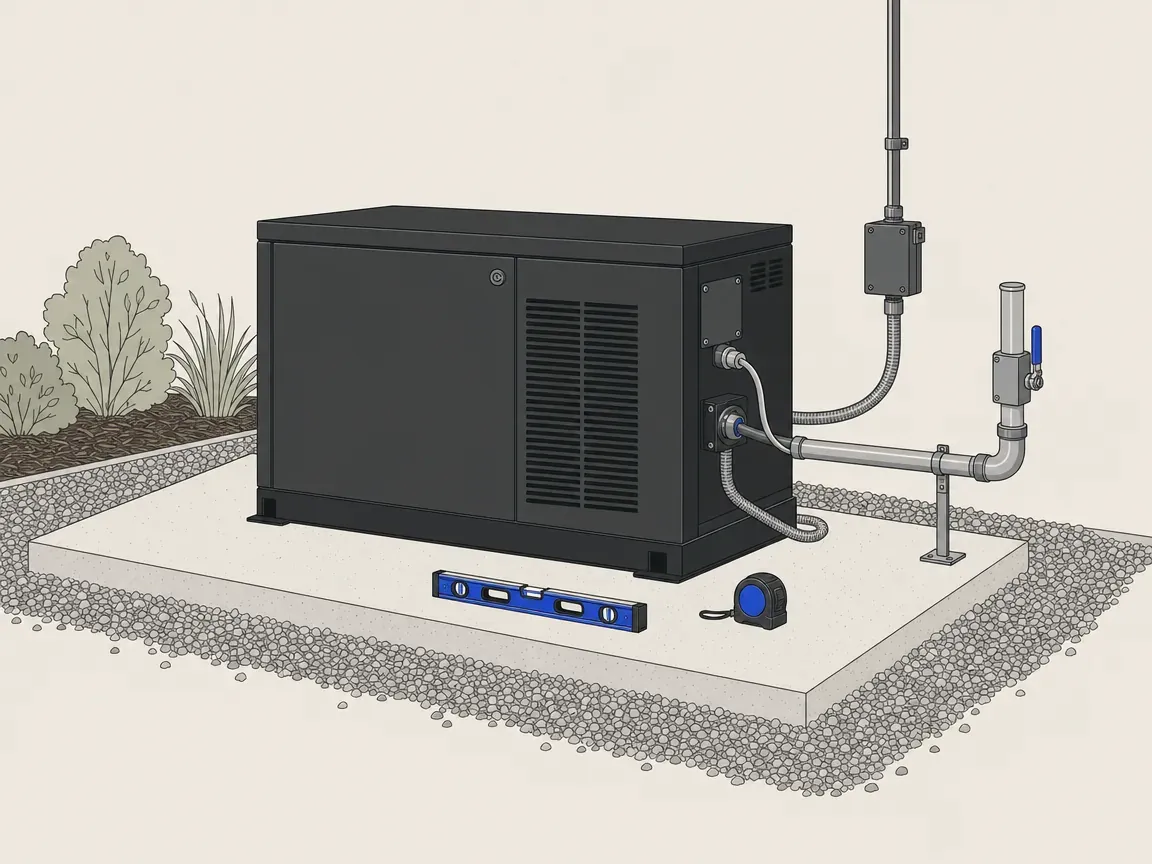
A standby whole house generator rests on a concrete pad, is wired to an automatic transfer switch, and burns either line gas or propane from a tank. Once power goes out, it starts by itself within seconds. Expect about $11,169 to $16,069 installed for a home standby generator in a 2,000 sq ft house that has central air.
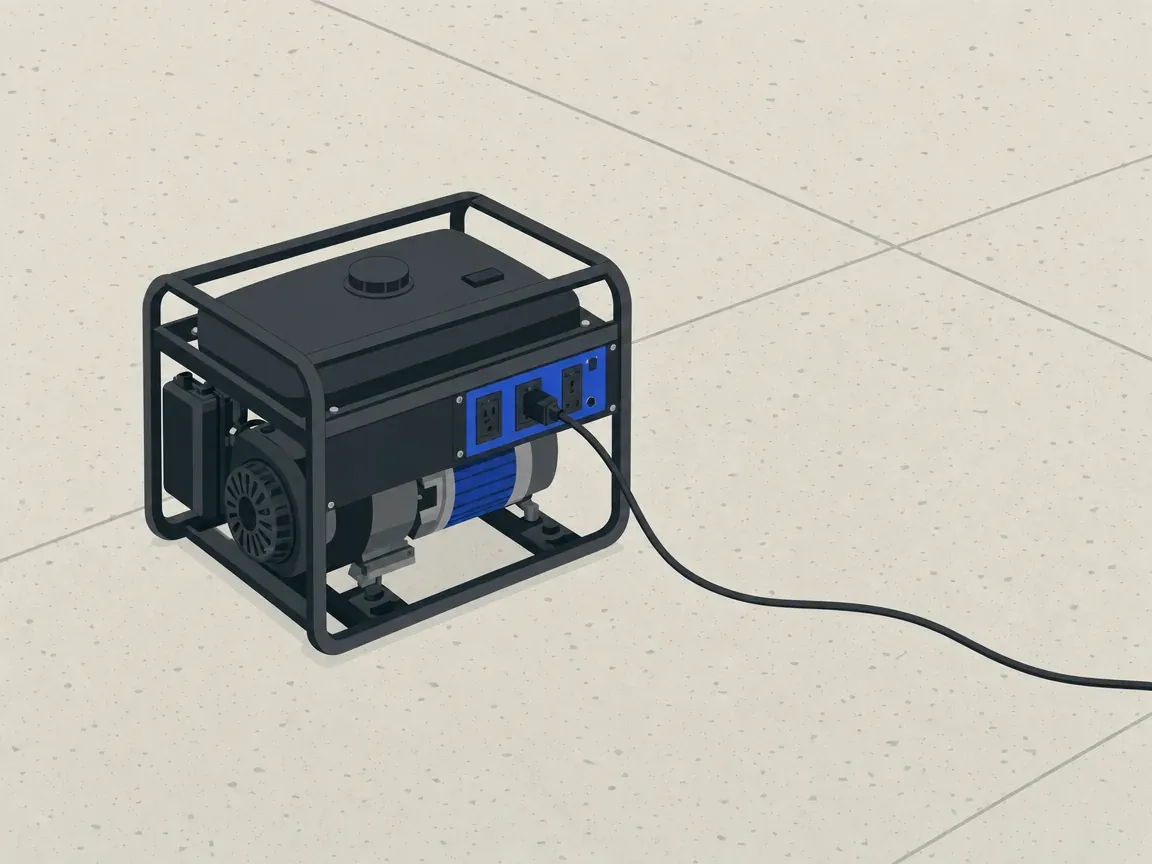
A portable unit runs on gasoline. It plugs into an inlet box through a transfer switch or an interlock kit. With a few hundred dollars of wiring, it runs the essentials. Read what each portable size can run plus whole house generator cost state by state.
Generator size questions
What size generator do I need for a 2,000 sq ft house?
With natural gas and 3-ton central air, a 22 kW standby unit. Running load comes to 13.3 kW, and the AC start adds 2.5 kW. On natural gas, about 11% comes off the rating.
Can one 22 kW generator cover what a home needs?
With a 3-ton central AC in place, a 22 kW unit handles a home of up to 3,500 sq ft when you burn natural gas. On propane, it handles up to 5,000 sq ft. With 4-ton AC on natural gas, it handles houses of 2,500 sq ft or less. For electric heat or a heat pump, you usually need one size more.
Can one portable generator run an entire house?
It can't power an entire house.
With an interlock kit fitted, a portable from 7,500 to 10,000 watts covers the fridge, lights and outlets, plus the furnace fan and a sump pump or well pump. Central air or an electric dryer can't run on it at the same time.
Why does natural gas need a bigger generator?
Running natural gas, that same engine makes about 11% less power, since each cubic foot carries less energy than propane. Manufacturers list both numbers: on the 22 kW Generac, propane gives 22,000 W while natural gas gives 19,500 W.